
Size: 6 x 9
Pages: 224
Illustrations: 14 b&w halftones
Rhetoric & Communication
paperback
ebook
hardcover
Books
Open Access Ebook
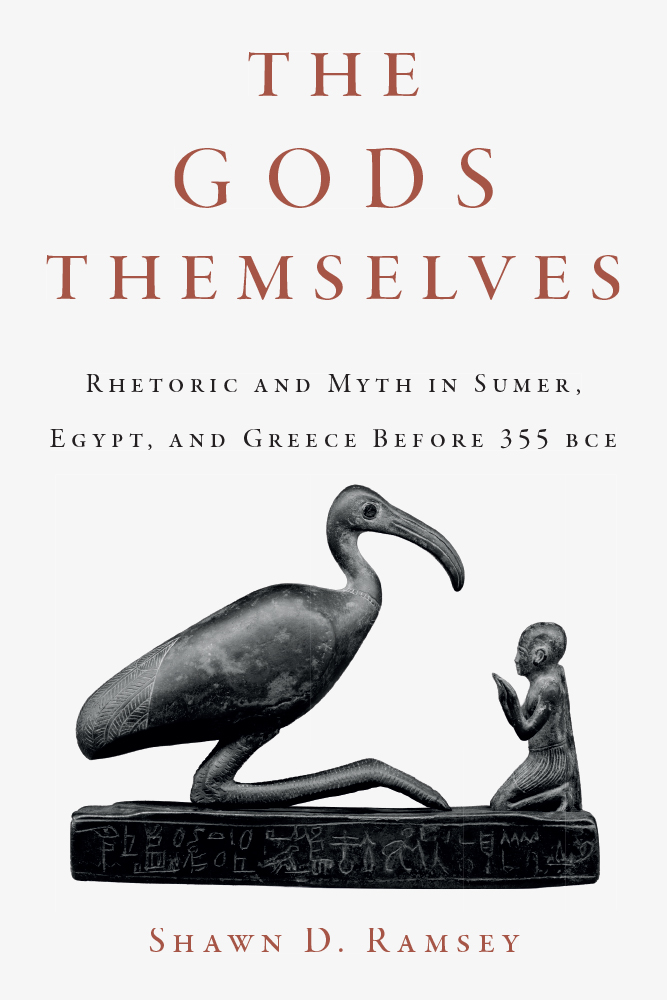
The Gods Themselves
Rhetoric and Myth in Sumer, Egypt, and Greece Before 355 BCE
Shawn D. Ramsey
Ebook
978-1-64336-656-2
Published: Jun 11 2026
The inclusion of this book in the Open Carolina collection is made possible by the generous funding of University of South Carolina Libraries
"Ramsey's fresh readings of ancient Mediterranean myths expand what counts as rhetorical theory, offering new sites of inquiry for historians of rhetoric."—Martin Camper, Loyola University Maryland, author of Arguing over Texts: The Rhetoric of Interpretation
"Ramsey reveals the impact of early Eastern thought on Western intellectual history through rhetoric."—Richard Leo Enos, professor emeritus, Texas Christian University