
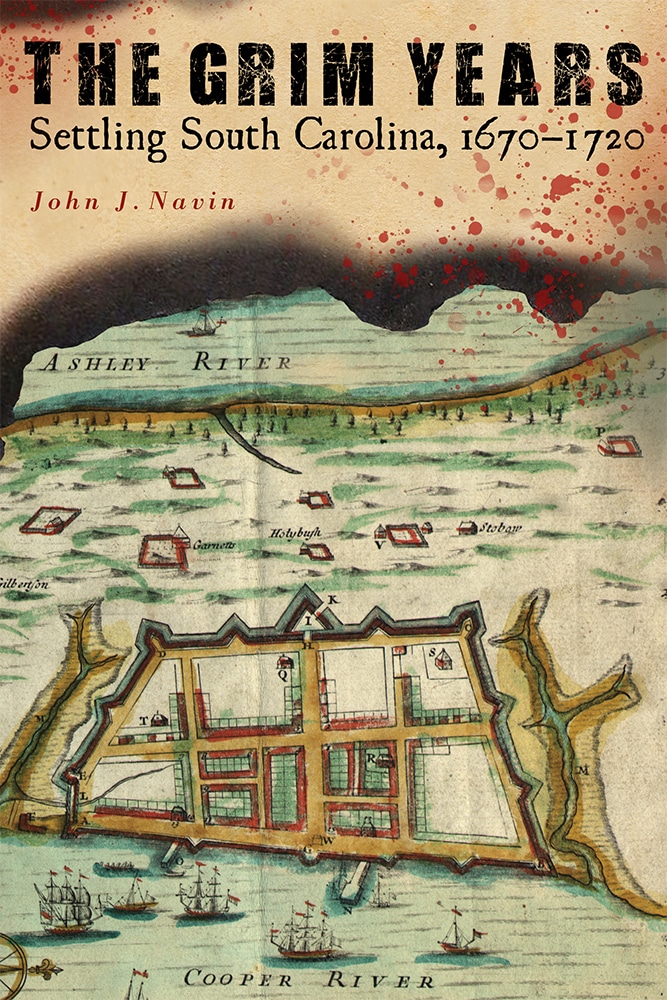
Size: 6 x 9
Pages: 212
Illustrations: 5 illustrations, 5 maps
African American Studies
paperback
ebook
hardcover
Books
South Carolina History & Culture
Native American Studies
The Grim Years
Settling South Carolina, 1670-1720
John J. Navin
Ebook
978-1-64336-055-3
Published: Dec 31 2019
The inclusion of this book in the Open Carolina collection is made possible by the generous funding of
"In his splendid The Grim Years: Settling South Carolina, 1670-1720, John Navin narrates the compelling story of a colony besieged by meteorological, epidemiological, economic, and manmade catastrophes only to arise like the phoenix from its ashes. Meticulously researched, The Grim Years offers a fresh and exciting look at the forces that turned a floundering colonial experiment into England's most wealthy possession in British North America and set into motion the social and political dynamics that would influence the future of the United States."—Orville Vernon Burton, Clemson University
"Navin describes the efforts of European colonists to build a settler-plantation world and its impact on everyone in the region. This is a well-told tale about the creation of a grim, Hobbesian colonial world of disease, severe climate, and enslavement of all kinds that faced annihilation by Yamassees at the end of the grim years. The tragedy is that after surviving a new society emerged based on a Black majority, plantation slavery, and enormous profits for some."—Aaron Spencer Fogleman, Northern Illinois University
"John Navin's extraordinary scholarship offers a story that goes far beyond the "Great Men" of the time, reaching as deeply as possible into the lives of the lesser folks and those with no voice of their own: slaves, both African and Native American. I most strongly recommend this volume to scholars of the Atlantic World and the two Carolinas."—Wade G. Dudley, East Carolina University
"A welcome addition as an introduction to and overview of the proprietary era of South Carolina history—an era where we desperately need more scholarship."—Journal of Southern History