
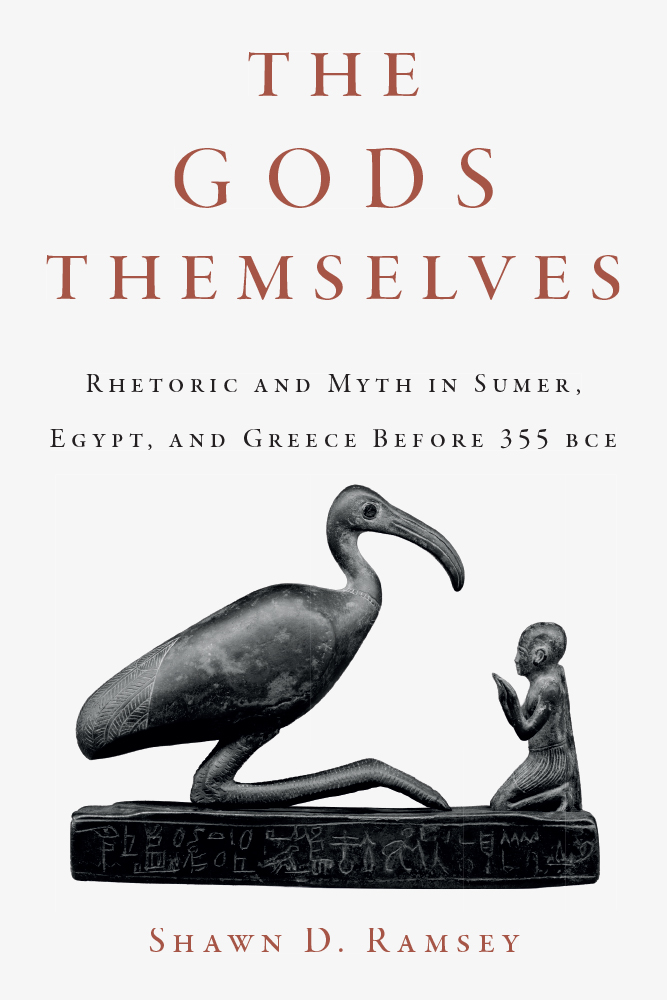
Illuminates the geographic and cultural diversity of ancient rhetoric
The Gods Themselves examines ancient myth as a source of rhetorical precept and a tool of human persuasion. In this provocative work, Shawn D. Ramsey extends the history of rhetoric to 2650 BCE through archaeological, epigraphical, and textual sources from Sumer, Egypt, and Greece to the time of Plato.
In his examination of "rhetorical myths"—the stories we tell ourselves about the stories we tell ourselves—Ramsey presents rhetoric as the knowledge of principles guiding speech and writing. These narratives show rhetoric to be an abstract field of knowledge with ontological significance. Chapters in The Gods Themselves highlight myths that teach rhetorical theory or praxis, such as those featuring Sumerian goddess Nisaba and Egyptian deities Seshat and Thoth, figures who personify rhetorical concepts of archival knowledge and discourse creation. Ramsey then analyzes how these early myths influenced writings by the Greek thinkers Prodicus, Isocrates, and Plato. Underscoring myth's role in shaping rhetorical culture, this synchronic history bridges ancient traditions and their lasting influence on rhetorical theory.
Includes a foreword by Richard Leo Enos.
Shawn D. Ramsey teaches communication and ethical reasoning in Doha, Qatar. He has published in journals including Rhetoric Society Quarterly, Rhetoric Review, and Journal for the History of Rhetoric.
"Ramsey reveals the impact of early Eastern thought on Western intellectual history through rhetoric."—Richard Leo Enos, professor emeritus, Texas Christian University
"Ramsey's fresh readings of ancient Mediterranean myths expand what counts as rhetorical theory, offering new sites of inquiry for historians of rhetoric."—Martin Camper, Loyola University Maryland, author of Arguing over Texts: The Rhetoric of Interpretation